Alba Galeotti (born Giuseppina Genisio)
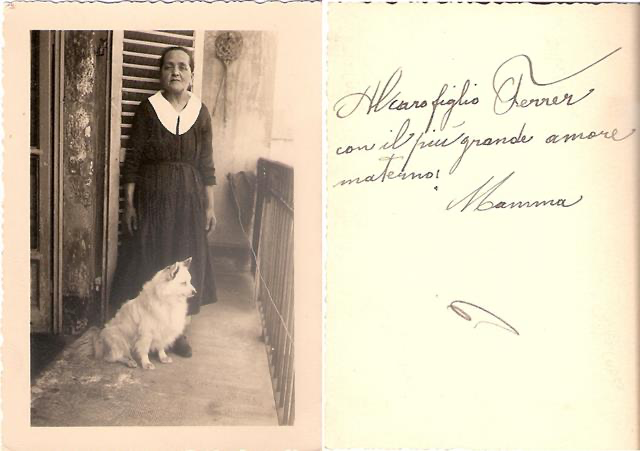
Born: 1867, Canischio, Italy
Nationality: Italian
Ethnicity:
Occupation: Housewife; laborer
Migration: Immigrated to US c. 1902
Affiliation: Anarchist
After immigrating to the United States around 1902, she married coal miner Killo Gotti in Lafayette, Missouri, later adopting the anarchist name “Alba,” meaning “Dawn.” She named her children Idea (i.e. “L’Idea” of anarchism) and Ravachol (after the French anarchist of the same name). By 1908 she was contributing funds and articles to the Italian-language anarchist newspapers Cronaca Sovversiva and La Questione Sociale and corresponded with anarchists in Italy. She also raised money for the antimilitarist anarchist paper Rompete le file! in Milan. Following her separation from Gotti, she married anarchist miner Guglielmo Galeotti in 1909. The couple lived in mining communities in Kansas and Illinois and named their children Ferrer and Germinal. Unconfirmed reports suggest she was deported in 1916 and illegally returned to the United States. Arrested in 1920 alongside Galeotti, she escaped custody while he was deported. She continued anarchist activity, including collecting funds for the Sacco-Vanzetti Defense Committee in 1921. In 1923 arrested in Schulter, Oklahoma. While detained, she refused food for thirty-three days, was declared insane, and forcibly fed. Deported on January 10, 1924, leaving her two youngest children in the care of her eldest daughter, Ida (Idea) Gotti.
In Italy she did not reunite with Guglielmo Galeotti, and remained in correspondence with her children. Died in Turin in 1940.
Sources: Cronaca Sovversiva, May 31, 1913; Jennifer Guglielmo, Living the Revolution: Italian Women’s Resistance and Radicalism in New York City, 1880-1945; Henryetta Daily Stanard (Henryetta OK), January 1 and 2, 1924; Henryetta Standard (Henryetta OK), January 3 and January 7, 1924; Ancestry.com; additional information provided by Gina Norstedt.
Guglielmo Galeotti (a.k.a. William Galleoti)
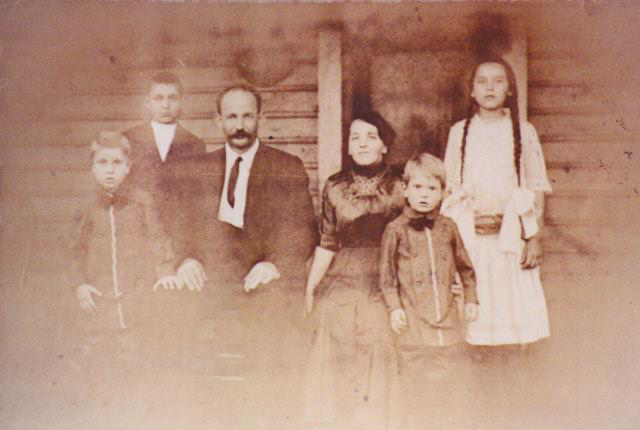
Born: 1871, Santa Sofia, Italy
Nationality: Italian
Ethnicity:
Occupation: Miner
Migration: Immigrated to US 1902
Affiliation: Anarchist
Became an anarchist in Italy during the late 1880s and was regarded by Italian authorities as a dangerous subversive. Repeatedly arrested and imprisoned for subversive activities between 1888 and 1902. Fled briefly to Switzerland in 1901, but was expelled and arrested on unfounded suspicion of complicity in the assassination of King Umberto I. Subsequently emigrated to and then expelled from Trieste. After immigrating to the United States, lived in mining communities in Pennsylvania, Kansas, and Illinois and became a leading figure in the Kansas anarchist Gruppo 11 Novembre. In 1909 married fellow anarchist Alba Genisio. In 1911 joined other group members in traveling to Mexico to assist the anarchist Partido Liberal Mexicano during the Mexican Revolution but soon became disillusioned and returned to the United States. Deported on February 19, 1920.
Although he remained under surveillance in Italy, authorities reported that by 1935 he had withdrawn from politics and allegedly showed sympathy toward the Fascist regime.
Sources: CPC busta 2236; Michele Presutto, La rivoluzione dietro l’angolo: Gli anarchici italiani e la Rivoluzione messicana, 1910-1914; Henryetta Daily Stanard (Henryetta OK), January 1, 1924; Ancestry.com; additional information provided by Gina Norstedt.
Luigi Galleani

Born: 1861, Vercelli, Italy
Nationality: Italian
Ethnicity:
Occupation: Editor
Migration: Immigrated to US 1901
Affiliation: Anarchist
Became an anarchist while studying law at the University of Turin. After fleeing police repression in Italy, he lived in France and Switzerland, working with anarchist geographer Élisée Reclus, before being arrested, expelled, and imprisoned in Italy. While confined to the island of Pantelleria, he met his wife Maria. He escaped in 1900 and fled to Egypt and England before immigrating to the United States in 1901.
In the United States, edited La Questione Sociale in Paterson, New Jersey, and led the 1902 silk workers’ strike, for which he was indicted for inciting riot and fled to Canada, then Barre, Vermont, where founded newspaper Cronaca Sovversiva in 1903. Later relocated the paper to Lynn, Massachusetts. Emerged as the leading Italian anarchist proponent of insurrectionary violence. Deported on June 24, 1919, leaving his wife and six children behind.
Upon arrival in Italy, briefly arrested and then relaunched Cronaca Sovversiva in Turin. Imprisoned for sedition in 1922, and again arrested in 1926, serving prison time followed by internal exile. He remained under surveillance until his death in 1931.
Sources: INS file 54235/33; CPC busta 2241; Ugo Fedeli, Luigi Galleani: quarant’anni di lotte rivoluzionarie (1891 –1931); Paul Avrich, Sacco and Vanzetti: The Anarchist Background; Antonio Senta, Luigi Galleani: The Most Dangerous Anarchist in America.
Alexander Gallod (a.k.a. Golod; Gold)
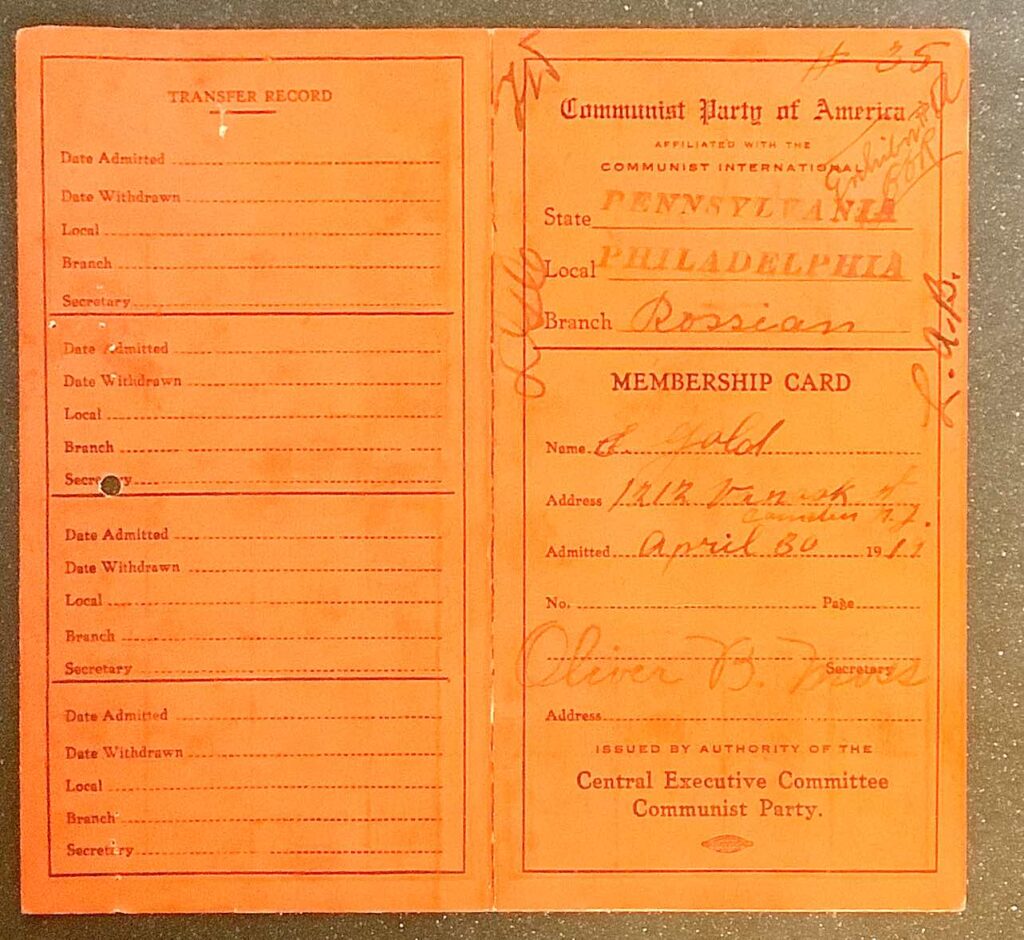
Born: 1888, Grodno region, Russia (present-day Belarus)
Nationality: Russian
Ethnicity: Polish
Occupation: Machinist
Migration: Immigrated to US 1914
Affiliation: Communist Party of America
Joined the Socialist Party of America before becoming an active member of the Communist Party of American and then the United Communist Party in Camden, New Jersey, and Philadelphia. Arrested in Philadelphia on January 7, 1920, and deported to Russia on February 26, 1921.
Sources: INS file 54811/973.
Laureano García
Born: Spain, year unknown
Nationality: Spanish
Ethnicity:
Occupation: Miner
Migration: Immigrated to US year unknown
Affiliation: Anarchist; IWW
An anarchist and IWW member, he was arrested in Jerome, Arizona, in February 1919 and deported later that year.
In 1931 he contributed funds from Spain to the New York anarchist newspaper Cultura Proletaria.
Sources: La Nueva Solidaridad, June 14, 1919; Cultura Proletaria, April 18, 1931.
Rogelo García (a.k.a. Regelio García; Roglio García)

Born: 1894, Quibicano, Cuba
Nationality: Cuban
Ethnicity:
Occupation: Cigar maker
Migration: Immigrated to US 1903
Affiliation: Anarchist
Became an anarchist around 1917 and joined the Los Corsarios Group, which published the anarchist paper El Corsario. Arrested in New York in February 1919 with thirteen other Spanish-speaking anarchists on unfounded allegations of plotting to assassinate President Woodrow Wilson. Although charges were dismissed, García was held for deportation. When questioned about his failure to naturalize, replied, “I do not even believe in my own country.” He was married to U.S.-born Blanca Fernandez and had an infant child at the time of his deportation on April 25, 1919.
Sources: INS file 54616/79.
Isso Gartner (a.k.a. Imre Geery or Geerry)
Born: 1895, Kassa, Hungary (present-day Košice, Slovakia)
Nationality: Hungarian
Ethnicity: Jewish
Occupation: Jeweler
Migration: Immigrated to US 1911
Affiliation: Socialist Party of America
Joined the Socialist Party of America in Baltimore. A conscientious objector, he opposed military conscription during the First World War. Attempted to unionize Baltimore jewelry workers through the International Jewelry Workers Union (AFL). In May 1918 he was arrested on dubious theft charges, sentenced to six months in prison, and later interned as an “alien enemy” at Fort Oglethorpe, Georgia. There he contracted tuberculosis of the hip, forcing him to use crutches. Upon release, Gartner was deported on May 8, 1920 on the unsubstantiated charge that he believed in overthrowing the U.S. government by force.
Sources: INS file 54709/38; Baltimore Sun, May 23, 1918; Jewelers’ Circular-Weekly, July 10, 1918.
Jack Gaveel (a.k.a. Jakov Zukatansky; Jackotonsky; Jacknowsky)
Born: 1889, Amsterdam, Netherlands
Nationality: Dutch
Ethnicity:
Occupation: Labor organizer
Migration: Immigrated to Canada 1913; then to US 1915
Affiliation: IWW
Migrated to England in 1905; returned to the Netherlands in 1910 and emigrated to Canada that same year. Joined the IWW in 1913 in Canada and became secretary of IWW Local no. 339 in Edmonton, Canada the following year. Migrated to the U.S. in 1915. Included in the federal indictment of IWW leaders in 1917, but dropped from the case before it went to trial. Acted as an IWW delegate in Los Angeles, where he was “active in organizing the Austrian and Croatian fishermen.” Arrested in April 1921 and sentenced to 1-4 years under California’s criminal syndicalism law. In San Quentin, refused to work in the prison jute mill, declaring: “I have never scabbed on my class outside of prison, and I won’t do it inside.” He was sent to solitary confinement, sparking a sympathy strike of thirteen other imprisoned IWW members. Deported to The Netherlands on August 1, 1924.
Remained active in labor and anarchist circles in The Netherlands. Into 1951 he resumed contact with the IWW and distributed IWW materials in Europe. In 1960, at age 71, he wrote: “I wish I were in America. I’d join you in the fight then.”
Sources: FBI file BS 186701-240; Industrial Worker, June 11, 1921; August 5, 1922; IWW Collection, Walter P. Reuther Library.
Fred Gazeyog (a.k.a. Gazeyek; Gazeycg)
Born: 1895, Grodno, Russia (present-day Belarus)
Nationality: Russian
Ethnicity: Belarusian
Occupation: Laborer
Migration: Immigrated to the United States in 1911
Affiliation: Union of Russian Workers
Employed by the B. F. Goodrich Company and joined the Union of Russian Workers in Akron, Ohio, in 1916, becoming secretary of the local branch. Arrested during the first Palmer Raids in November 1919 and deported to Russia on the Buford on December 21, 1919.
Sources: INS file 54709/535.
